Research
How do people adapt to adversity within systems that produce both risk and resilience?
The choices people make under constraint are not irrational. They are adaptive strategies. They embody intrinsic prioritization and reflect how individuals weigh competing inputs such as food security, income, safety, social obligation, and long-term uncertainty. If we want to understand why systems generate safety or harm - and change them - we must first understand the logic and coping strategies that emerge from them.
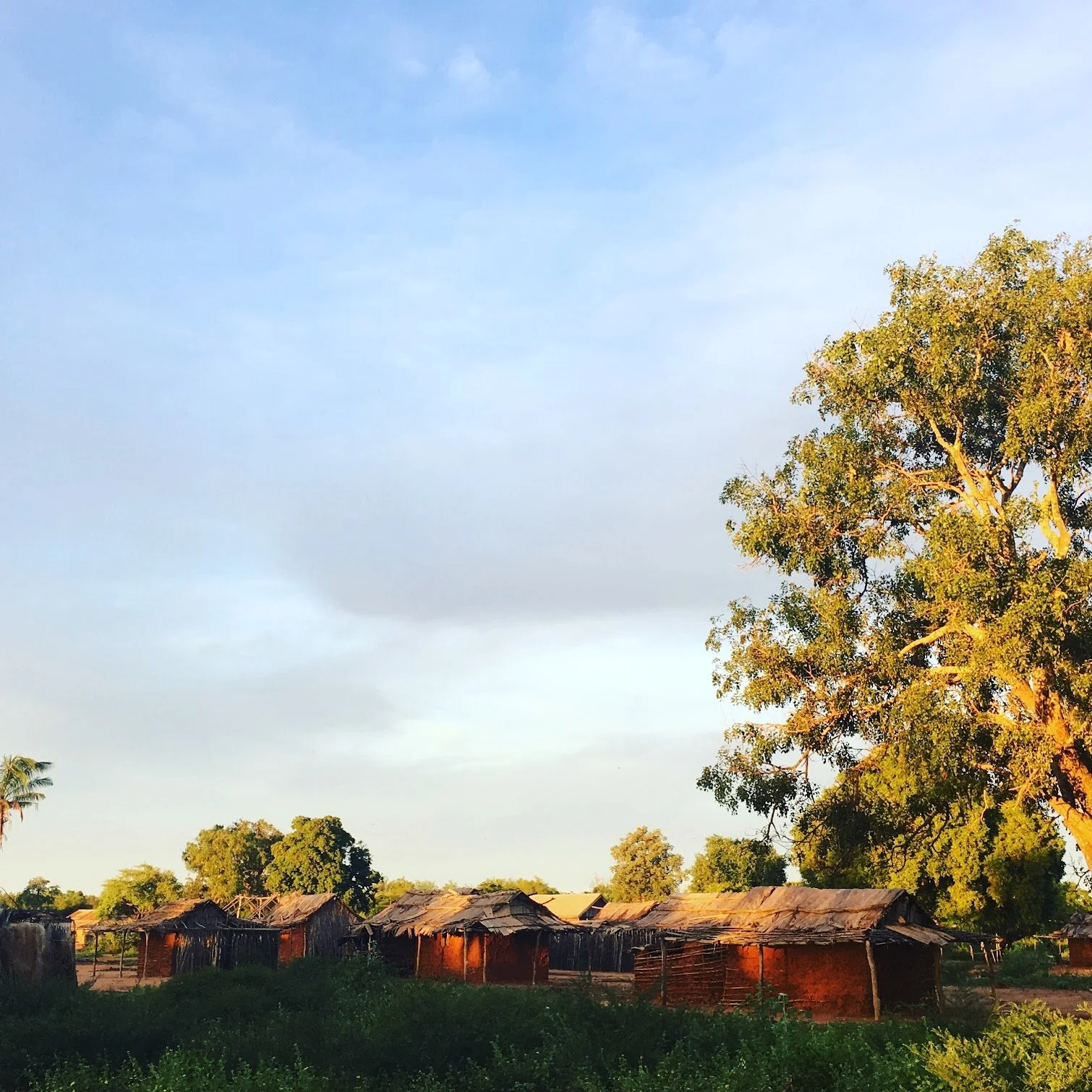
My work focuses on rural communities in Tanzania, Madagascar, and Nigeria, where climate change, social pressures, and economic constraints reshape access to biodiversity and ecosystem services. Across these landscapes, I study how individuals weigh trade-offs in real time. When crops fail, when markets shift, when disease risk rises, families adapt. The question is not only what people do, but why those decisions make sense within the constraints they face. I examine how to integrate this survival logic into public health and conservation interventions so that policy aligns with lived reality rather than working against it.
I also study the externalities of adaptive strategies. Individual behaviors, from illegal wildlife harvest to shifting human movement patterns, can ripple outward into ecological change, zoonotic spillover risk, and uneven health outcomes. I examine the feedback loops between human adaptive strategies and ecosystem dynamics to understand how systems amplify or dampen risk.
Beyond leading field studies, I study our field itself. I examine how scientists conducting research in remote and often risky environments navigate institutional systems that distribute protection unevenly. Power dynamics, disciplinary norms, and organizational structures shape who is protected and who is exposed. Applying systems thinking to workplace safety allows us to move beyond individual blame and toward structural redesign that fosters equity and accountability.
Across contexts, my work centers on this question: how do individuals navigate systems that both sustain and endanger them, and how can those systems be reshaped to support durable wellbeing?
Socio-Ecological Systems
Biodiversity and Family Wellbeing

Field Work Systems

Scientist Adverse Field Experiences Research
Infectious Disease Systems
Scaling Lassa Virus Dynamics within Anthropogenic Ecosystems

Graduate and Post-Doc Projects
-
During my doctoral research in Madagascar, I investigated how rural communities used forest and marine wildlife as survival strategies during periods of famine and resource scarcity.
Using mixed ethnographic and quantitative methods, I conducted structured surveys, participant observation, and semi-structured interviews with more than 300 individuals in a single village over six months. I examined agricultural production, food insecurity, water and sanitation access, human–wildlife contact, natural resource use, and perceptions of environmental change. I also incorporated zooarchaeological analysis, examining faunal remains from hunting activities to understand patterns of biodiversity use over time.
The findings challenged simplified narratives about poverty and illegal wildlife consumption. While food insecurity and economic precarity were strongly associated with wildlife harvest, these factors alone did not explain how families navigated scarcity. This work demonstrated the limits of one-dimensional socioeconomic indicators for understanding human behavior in conservation and public health contexts. It argued for a systems-based approach that integrates ecological, economic, and health determinants of wellbeing. By centering lived experience and adaptive strategy, the research aimed to generate solutions that are not only theoretically sound, but realistic and implementable.
Selected Publications from this ProjectThompson, K.E.T., Borgerson, C., Wright, P.W., Randriamanetsy, J.M., Andrianantenaina, M.Y., Andriamavosoloarisoa, N. M., Razafindrahasy, A.T., Rothman, R.S., Surkis, C., Kling, K.J., Daniels, C., Twiss, K.C. (2025). Management implications of human livelihood strategies on Madagascar's coastal landscapes. Conservation Science and Practice, e70006. https://doi.org/10.1111/csp2.70006
Thompson, K.E.T., Romanello, D., Borgerson, C., Randriamanetsy, J.M., Andriamavosoloarisoa, N.N.M., Andrianantenaina, M.Y., Razafindrahasy, T.A., Surkis, C., Twiss, K.C., & Lewis, B. (2023). A Nuanced Examination of Primate Capture and Consumption and Human Socio-Economic Well-Being in Kirindy Mitea National Park, Madagascar. Animals, 13(18), 2914. https://doi.org/10.3390/ani13182914
Thompson, K.E.T., Borgerson, C., Wright, P.W., Randriamanetsy, J.M., Andrianantenaina, M.Y., Andriamavosoloarisoa, N. M., Razafindrahasy, A.T., Rothman, R.S., Surkis, C., Bankoff, R.J., & Twiss, K.C. (2023). A coupled humanitarian and biodiversity crisis in Western Madagascar. International Journal of Primatology, 44, 430–457. https://doi.org/10.1007/s10764-022-00338-3
Wachniuk, M., Borgerson, C., Wright, P.W., Randriamanetsy, J.M., Andrianantenaina, M.Y., Andriamavosoloarisoa, N.M., Razafindrahasy, A.T., Surkis, C., Twiss, K.C., & Thompson, K.E.T. The Influence of Cultural Prohibitions on Terrestrial Animal Harvests in Western Madagascar. Madagascar Conservation and Development. 20(1).
-
At Penn State, my postdoctoral work with Dr. Sagan Friant examined how livelihood decisions shape zoonotic risk within the bushmeat trade in southern Nigeria.
The bushmeat trade is not a monolith. It is a supply network that moves wildlife from rural forests to urban markets. Along that network, different actors experience different risks and benefits. Hunters, vendors, and restaurant workers depend on wildlife in distinct ways. They handle different species. They interact with meat in different states. They rely on the trade to different degrees. To understand this variation, I co-designed annual and monthly survey tools and helped implement 1,338 seven-day recall interviews with 150 participants between January 2023 and April 2024. We documented more than 6,000 wildlife interactions across over 40 species. At the highest level, results revealed uneven exposure and uneven dependence. Hunters had more frequent contact with unpreserved meat and took the fewest hygienic precautions, increasing potential pathogen exposure. Downstream actors generated higher revenue but reported greater economic reliance on bushmeat. Reliance on different taxa is also uneven across the trade.
This work reframes the bushmeat trade as a complex human–wildlife interface rather than a single conservation problem. Publications are forthcoming. See www.saganfriant.com for more.
-
During my postdoctoral work at the Columbia Climate School with Dr. Kristina Douglass, I expanded my systems-based approach to examine how individuals navigate climate change adaptation under layered social and environmental constraints.
In partnership with the Velondriaka Community Association in southwestern Madagascar, I helped develop a collaborative research toolkit to assess how climate change reshapes livelihood strategies in coastal communities. Rather than treating “the community” as a uniform unit of analysis, this work centered variation within households and across social roles. Drawing from environmental sociology and public health, I integrated concepts such as social adaptive capacity, structural vulnerability, and barriers to care-seeking behavior. This interdisciplinary framework enabled the co-production of an assessment examining how fishing practices, resource access, health systems, and social networks intersect under climate stress.
This work challenged simplified narratives of climate vulnerability. Adaptation is not a single response but a set of differentiated strategies shaped by gender, livelihood role, access to capital, and institutional trust. By centering lived experience, this work provides a stronger foundation for designing interventions that reflect how people actually navigate scarcity and change.
Read about this here:Thompson, K.E.T., Buffa, D.C., Reijerkerk, D., Brittain, S., Manahira, G., Samba, R., Lahiniriko, F., Brenah Marius, C.J., Augustin, J.Y., Tsitohery, J.R.F., Razafy, R.M., Leonce, H., Rasolondrainy, T., & Douglass, K. (2023). Understanding constraints to adaptation using a community-centered toolkit. Philosophical Transactions of the Royal Society B: Biological Sciences, 378(1889), 20220391. https://doi.org/10.1098/rstb.2022.0391